
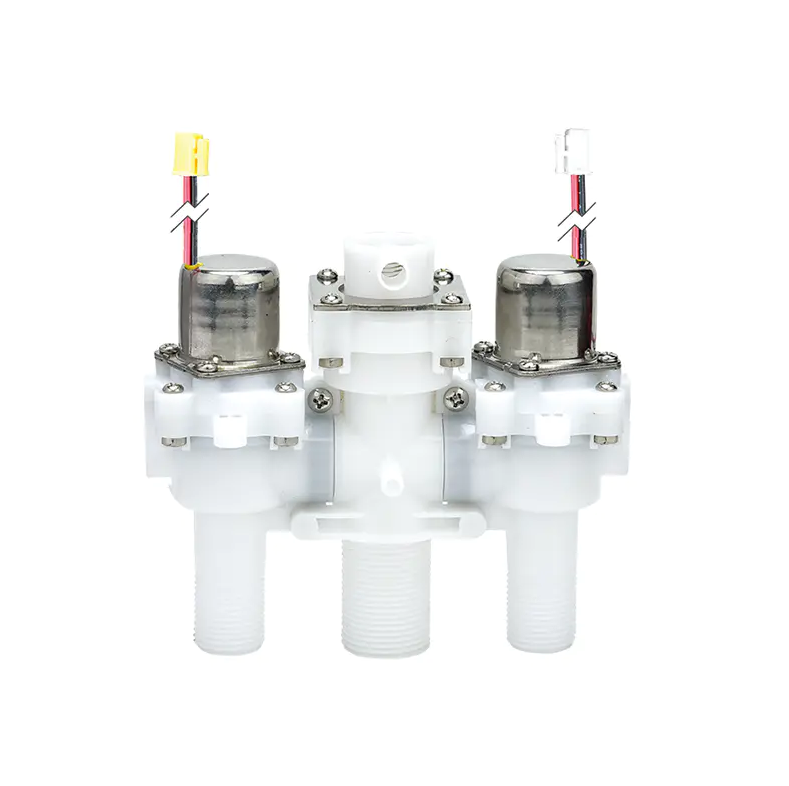
A production team from a Solenoid Valve Factory often works closely with clients who rely on a Sanitary Ware Solenoid Valve to manage water flow in bathrooms, kitchens, or public facilities. Many users interact with these components daily without noticing how they operate, yet the structure behind them influences how smoothly water is delivered or stopped. When both factory expertise and sanitary-use requirements meet, the resulting product usually fits the needs of routine installations.
Manufacturers consider how a valve responds under continuous use. A design suitable for washbasins or toilets needs a steady switching action, and the materials must handle moisture, cleaning agents, and frequent operation. Engineers often review the magnetic coil structure, internal pathways, and sealing surfaces to maintain consistent performance. These factors influence both convenience and stability.
Sanitary valves also require a balance between size and function. Installers appreciate compact dimensions, especially when working in limited spaces behind panels or inside cabinets. At the factory level, the team coordinates machining, coil winding, testing, and assembly to achieve dimensions that match installation standards while staying practical for mass production.
Different application environments lead to discussions about materials. Some installers prefer brass for its durability, while others use engineering plastics in areas where weight or cost considerations matter. Factory engineers adapt designs to these preferences, offering variations that align with different sanitary system layouts.
Testing procedures remain a routine part of production. Pressure tests, coil energizing cycles, and sealing inspections ensure the valve responds reliably to electrical signals. Although these steps appear repetitive, they help maintain consistency, especially when valves will be installed in public restrooms, commercial buildings, or residential complexes.
Installers often highlight how wiring and connector styles influence their workflow. A valve that allows quick connection helps streamline daily tasks. Factories respond by improving cable routing, terminal types, and protective housings, ensuring stability without adding unnecessary complexity.
Users in real environments appreciate valves that operate quietly and switch steadily. A sanitary ware solenoid valve plays a simple role—opening or closing water flow—but it affects user experience directly. Smooth actuation reduces wear on fixtures and helps maintain comfort in shared spaces where noise level matters.
Manufacturers also consider maintenance needs. Clear internal pathways help reduce blockages caused by minerals or debris, while accessible covers support cleaning work if required. Valves placed in high-traffic facilities benefit from robust sealing structures that reduce leakage risk and minimize service interruptions.
As factories continue refining production steps, the collaboration between a Solenoid Valve Factory and users of a Sanitary Ware Solenoid Valve supports the development of components suited for long-term use within modern sanitary systems.

 English
 Arabic
 French
 Spanish
 Portuguese
 Deutsch
 Turkish
 Dutch
Dutch
 Italiano
 Romaian
 Portuguese (Brazil)
 Greek
Greek